What can I do
4 ways to help miniature dogs:
- Don't buy a miniature dog
- Choose a healthy dog with normal size
- Share this information with others
- When you have a miniature dog, take it to the vet

1. Don’t buy a miniature dog
This demand drives illegal breeding and importation. Not buying such an animal will bring an end to the suffering of these unhealthy dogs and create a better future with healthy animals.
Don’t be tempted to buy a miniature pedigree dog. Miniature dogs with a pedigree also suffer the same health issues as the ones without a pedigree.

2. Choose a dog with a normal size
When purchasing a dog, don’t be led by social media or influencers.
- Ask for the dog’s weight when fully grown; it should be at least 3 kilograms but ideally at least 5 (at healthy weight)
- Ask about the expected adult weight of the puppy
- Be sure it has no other health issues like a flat face
- Look at the parents of the puppy: are they strong and healthy?
- Never buy a dog without background information
- Ask for independent expert advice, i.e. advice from a veterinarian

3. Share the campaign
It is important to inform as many people as possible about these health issues. You can help by sharing this information with neighbours, friends and family.
Click on the posters below to download them.

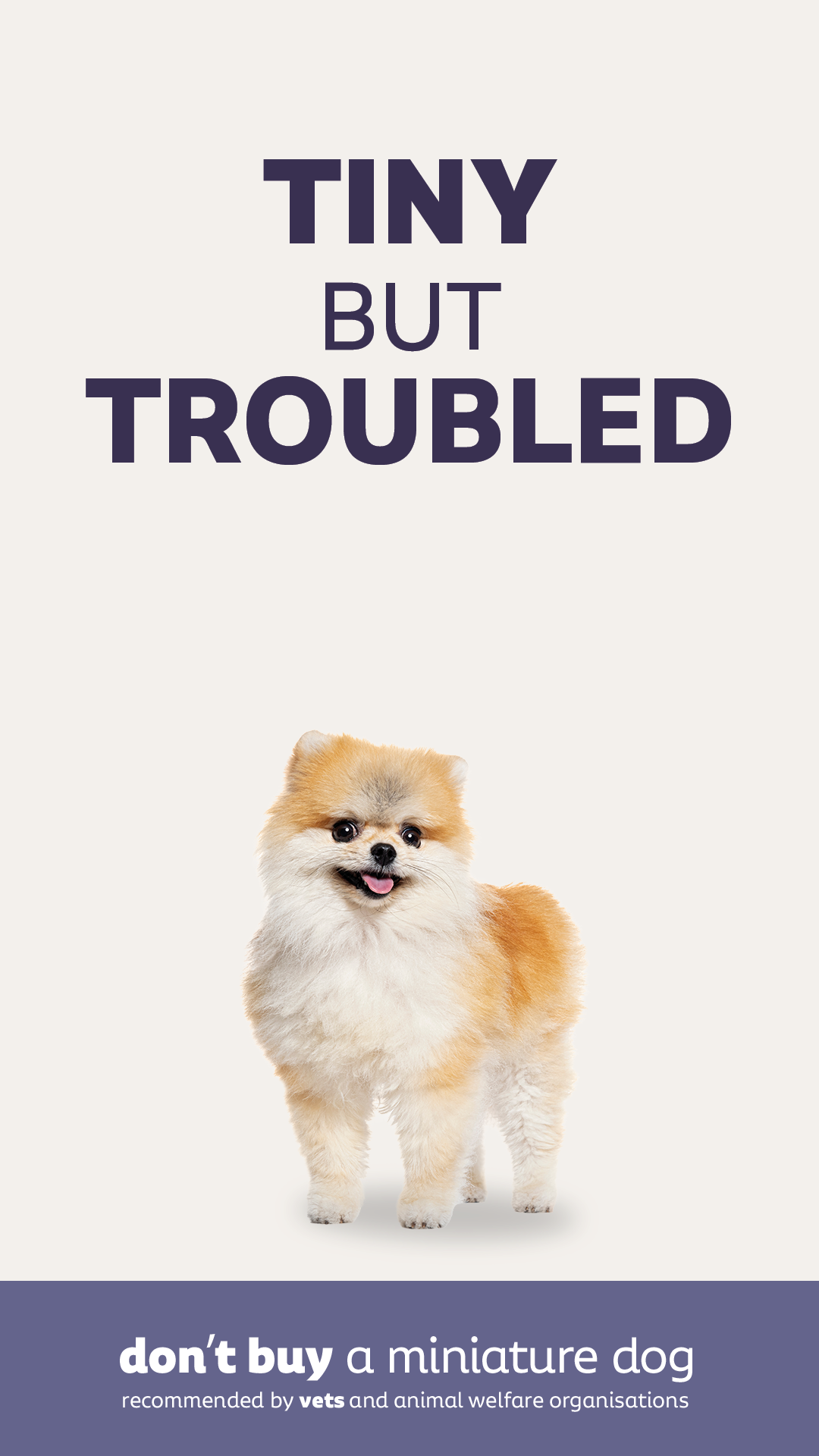
Are you looking for pictures to share on social media? Or are you interested in the informative flyer? View the complete information pack.
4. Take your dog to the vet
When you already have a pomeranian, toy poodle, chihuahua or another miniature dog, then take it to the vet.
Several treatments can reduce the suffering of your miniature dog. Treatments such as dental care, eye procedures and knee surgery can make a real difference. A visit to the vet is important to assess whether your dog is in pain. An MRI scan can help diagnose problems of the skull (chiari malformatie and syringomyeli) so your dog can receive the right treatment

Would you like to learn more about the health issues of miniature dogs?
This project has been realised with the support of:
Stichting DierenLot, Stichting Femme van der Schaaf, Stichting Abri voor Dieren
Recommended by vets and animal welfare organisations